


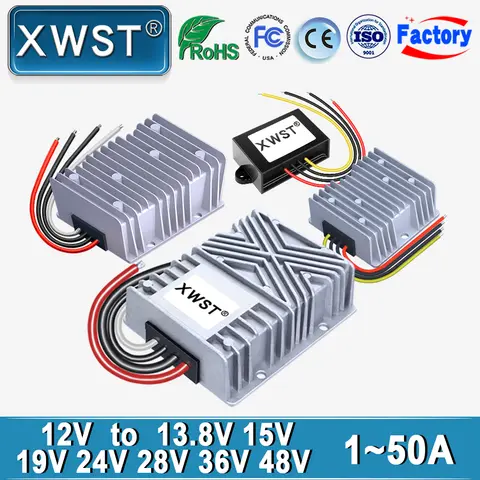
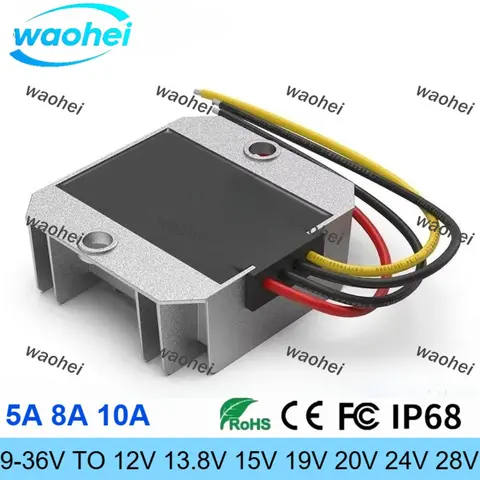
Results for 28v to 12v converter

Looking for a reliable 28V to 12V converter? You're in the right place. This guide delivers practical, real-world solutions for efficiently stepping down voltage from 28V to 12V, ideal for automotive, industrial, and LED lighting applications. Whether you're powering a 12V device from a 28V source or stabilizing voltage in a DC system, these converters ensure safe, efficient performance with minimal power loss.
The search intent behind 28V to 12V converter typically revolves around voltage regulation in environments where higher input voltage (like 24V or 28V DC systems) must safely power 12V devices—common in trucks, solar setups, and industrial equipment. Users need not only a functional converter but also one that’s durable, efficient, and compatible with their specific load requirements.
DC-DC Step Down Converter
A type of power converter that reduces a higher DC voltage to a lower, stable DC output. Ideal for applications requiring precise voltage regulation under variable input conditions.
Switching Power Supply
A power supply that uses switching regulators to efficiently convert input voltage to output. Offers high efficiency (often >85%) and is suitable for continuous-duty applications.
Power Supply Adapter
A device that converts AC or DC input into a regulated DC output. Often used in automotive or home electronics to power low-voltage devices.

When selecting a 28V to 12V converter, consider these key specifications:
- Input Voltage Range: Ensure the converter supports 28V DC input (and handles transient spikes).
- Output Voltage Stability: Look for ±5% tolerance to maintain consistent 12V output.
- Maximum Output Current: Choose one rated for at least 5A if powering high-current devices like LED strips or control modules.
- Efficiency & Heat Dissipation: High-efficiency models (e.g., 90%+) reduce heat buildup—critical for long-term reliability.
  1. Verify the input voltage range matches your source (e.g., 24V–30V for 28V systems).
  2. Match the output current to your load (e.g., 5A for 60W LED strips).
  3. Check for over-voltage, over-current, and short-circuit protection features.
  4. Ensure proper heat sinking or ventilation if used in enclosed spaces.
  5. Use shielded cables and secure connections to minimize electromagnetic interference.

Recommended options include:
- A 12V 5A switching power supply (60W) with robust output regulation.
- A DC-DC step-down module (6–32V to 12V) with built-in voltage feedback for precision.
- A car power adapter with 220V AC input and 12V DC output—ideal for AC-powered environments.
Avoid cheap, unregulated modules with no protection circuits. They may fail under load or damage connected devices. Always test with a multimeter before full deployment.

28V to 12V DC Converter -AliExpress

Efficient 28V to 12V Conversion Solutions for Reliable Power Management


A 28V to 12V converter is essential for safely stepping down high-voltage DC power to a stable 12V output, ideal for powering LED strips, automotive accessories, surveillance systems, and industrial control devices. These converters ensure consistent performance, prevent overvoltage damage, and maintain system efficiency across diverse applications. Whether you're upgrading a vehicle’s electrical setup or setting up a smart home automation system, selecting the right 28V to 12V converter with proper specifications is critical for safety and long-term reliability.

Understanding the Search Intent Behind 28V to 12V Converter


Users searching for 28V to 12V converter are typically looking for a reliable, efficient, and safe way to convert higher DC voltage (commonly found in solar panels, industrial power supplies, or vehicle battery systems) into a stable 12V output suitable for low-voltage electronics. The underlying need is not just voltage conversion—it's about power stability, heat management, efficiency, and compatibility with specific devices. This includes avoiding voltage spikes, ensuring sufficient current delivery, and choosing between step-down (buck) converters and switching power supplies based on application demands.
DC-DC Converter
A device that converts direct current (DC) from one voltage level to another, commonly used in electronics where stable power supply is required.
Buck Converter (Step-Down)
A type of DC-DC converter that reduces input voltage to a lower output voltage while maintaining high efficiency and minimal heat dissipation.
Switching Power Supply
An electronic power supply that uses switching regulators to convert electrical power efficiently, often used in applications requiring higher output current.
Output Current Rating
The maximum amount of electrical current a converter can deliver continuously without overheating or failing.

Choosing the Right 28V to 12V Converter: Key Factors to Consider


When selecting a 28V to 12V converter, focus on the following parameters to avoid common pitfalls:
- Efficiency: Look for converters with >90% efficiency to minimize energy loss and heat generation.
- Output Current: Ensure the converter can deliver the required current (e.g., 5A for high-power LED strips).
- Thermal Management: Choose models with built-in heat sinks or fan cooling for continuous operation.
- Input Voltage Range: Confirm the converter supports 28V DC input, especially if used with solar or industrial sources.
- Protection Features: Overload, overvoltage, short-circuit, and thermal protection are essential for safety.

Real-World Application: Powering LED Strip Lights in a Vehicle


Problem: You want to install bright LED strip lights in your car’s interior, but your vehicle’s electrical system outputs 28V during certain conditions (e.g., alternator surge), which can damage standard 12V LED strips.
Solution: Use a 28V to 12V buck converter to regulate the voltage safely.
  1. Identify your power source: Confirm that your vehicle’s electrical system can reach up to 28V under load (common during engine start or high-speed driving).
  2. Select a suitable converter: Choose a DC-DC buck converter rated for at least 5A output and with a wide input range (e.g., 18–36V).
  3. Check compatibility: Ensure the converter has a stable 12V output with low ripple voltage to prevent flickering in LED strips.
  4. Install with proper wiring: Use appropriate gauge wires (e.g., 16 AWG or thicker) and secure connections to avoid voltage drop.
  5. Test under load: Power on the system and monitor temperature and output stability over 15–30 minutes.

Comparison of Top 28V to 12V Converter Options


Below is a comparison of three relevant products that serve as practical solutions for 28V to 12V conversion, based on real-world specifications and use cases:
Product Feature USB Buck Converter (6–32V to 12V) Switching Power Supply (220V AC to 12V DC) AC/DC Plug Adapter (220V AC to 12V DC)
Input Voltage 6–32V DC 220V AC 220V AC
Output Voltage 12V DC (step-down) 12V DC 12V DC
Output Current Up to 5A (60W) 5A (60W) Not specified (likely ≤3A)
Type DC-DC Buck Converter Switching Power Supply AC/DC Plug Adapter
Best For Vehicle systems, solar panels, portable devices Home electronics, LED strips, routers Car cigarette lighter sockets, basic accessories
Protection Features Overload, short-circuit, thermal Overvoltage, overcurrent Basic fuse protection

> Recommendation: For direct 28V to 12V conversion in automotive or solar applications, the USB Buck Converter (6–32V to 12V) is the most suitable choice due to its wide input range, high efficiency, and built-in safety protections. The switching power supply is ideal for AC-powered setups, while the plug adapter is limited to 12V output from AC sources and not suitable for 28V DC input.

Pro Tips to Avoid Common Mistakes


- ❌ Don’t use a standard 12V power supply rated for 12V input with 28V DC—it will likely burn out.
- ✅ Always verify the maximum input voltage rating of the converter before connecting it to a 28V source.
- ✅ Use a multimeter to test output voltage under load before connecting sensitive devices.
- ✅ Install a fuse (e.g., 5A) on the input side to protect against surges.
- ✅ Choose a converter with a heat sink if used in enclosed spaces or for continuous operation.
In summary, a 28V to 12V converter is not just a voltage reducer—it's a critical component for system stability and device longevity. By selecting a high-efficiency, well-protected, and properly rated converter, you ensure safe, reliable power delivery across a wide range of applications, from automotive lighting to industrial automation.

Aliexpress